
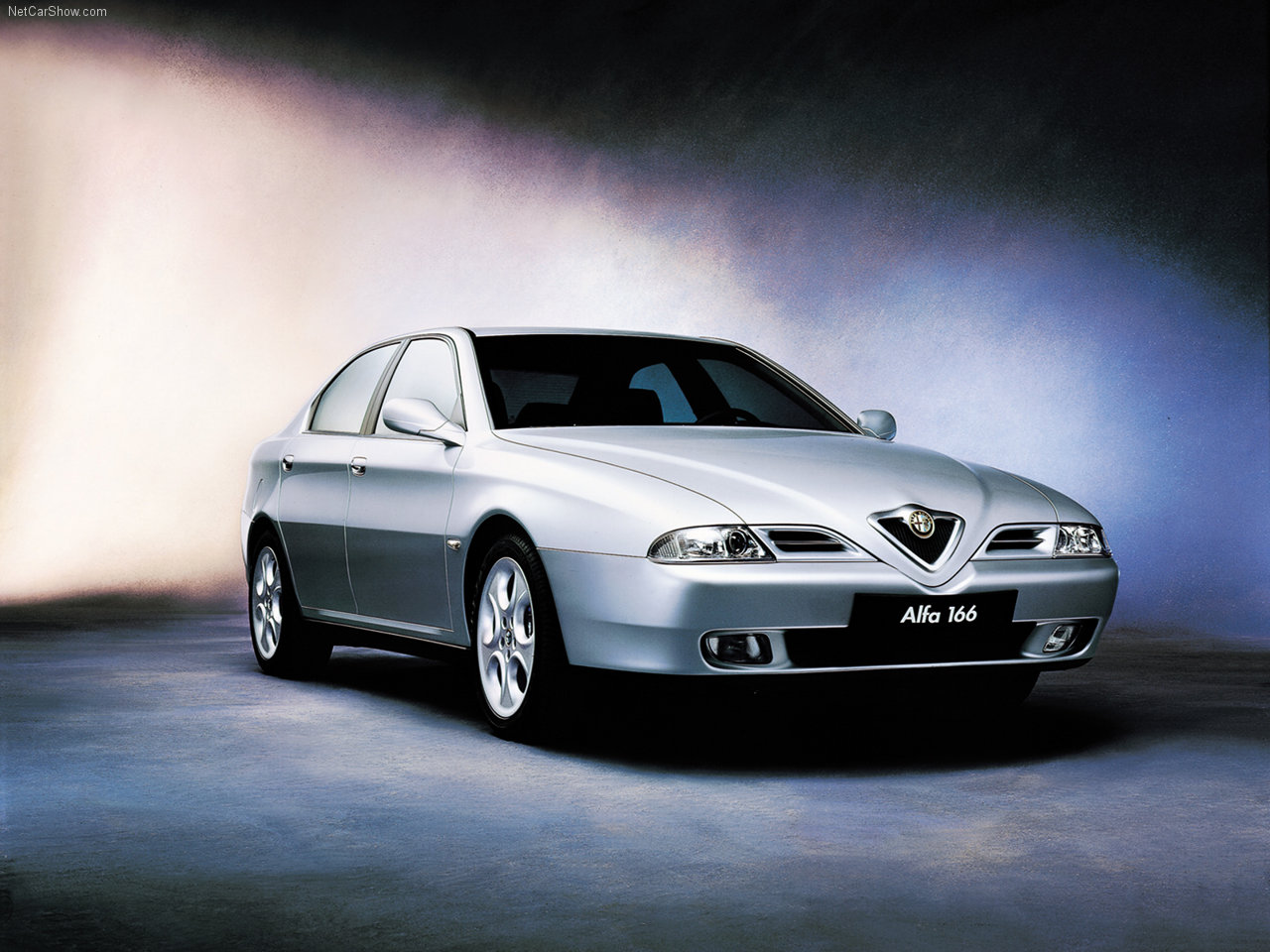
The early 1990s were a transitional time for Alfa Romeo. Lumped into Fiat’s sin-bin alongside their arch-nemesis Lancia, it had yet to find a new identity. The 75 kept the die-hards happy but did little to birth a new generation of Alfisti. The 33 sold over a million without anyone quite understanding why. The 164 was a far better autostrada cruiser than its difficult genesis suggested, but it belonged to a vision of the marque’s future that had already proved impossible. The Spider remained a beautiful antique curio.
The troubles that put Alfa under Fiat’s wing were economic, political and structural, but to survive into the new millennium it needed an emotional fix. It had to appeal to car drivers, above and beyond car buyers, with models people enjoyed looking at, and being looked at in.
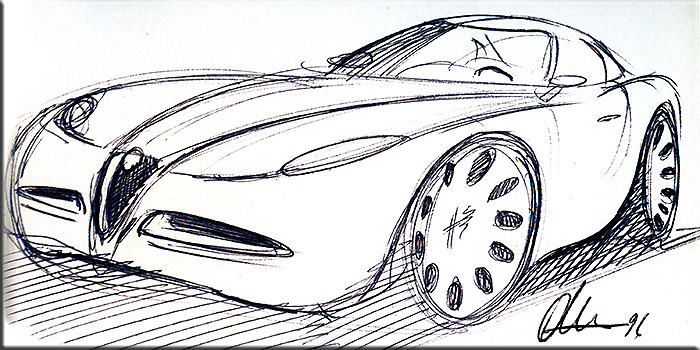
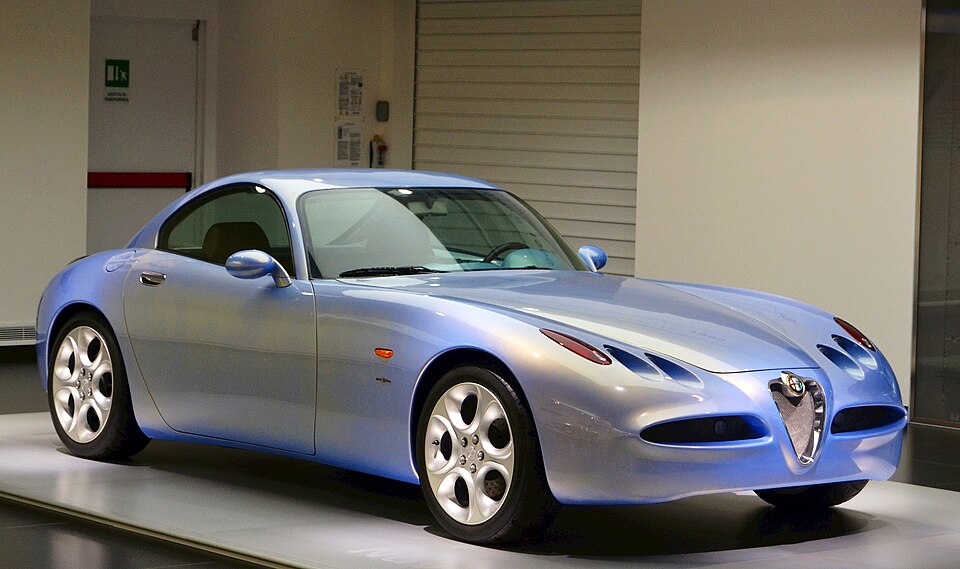
Step forward Walter de Silva, head of Centro Stile. The first public glimpse of his new direction came in 1996, when the Nuvola concept appeared at the Paris Motor Show. It still looks exciting today, which may explain the lukewarm reception for the 166. A comparitively lardy and leaden executive saloon that carried this new design language into our showrooms, alongside the much more lithe 156.
Alfa Romeo 166 History – A Troubled Birth
OK, “lardy and leaden” might be a touch harsh. But few cars ushered in by the Nuvola and the 156 were going to compare well, and the 166 we eventually got was a problem child, born of the seismic changes Alfa had suffered.
The plan in 1990 had been for a quick refresh of the 164: keep the platform and mechanicals, and put a shiny new skin on top. Progetto RT (Restyling Totale), internal code 934/935, drew sketches from Pininfarina, but de Silva’s team won out. Understandable aesthetically, but a disaster practically. Pininfarina could have turned their sketches into production quickly. The chaotic offices at Arese could not deliver a cappuccino at the time, let alone a rapid cosmetic make-over.
One year passed, then another. Fiat Auto boss Paolo Cantarella knew the replacement might not arrive until 1996, and he couldn’t face the Audi A6, BMW E39 5-Series and W210 Mercedes with underpinnings nearly a decade old. He scrapped the reskin and sent everyone back to the drawing board. The new project, Progetto 936, would sit on the platform developed for the Lancia Kappa, so the car would at least come from the same mechanical decade as its rivals.
Even piggybacking on the Kappa, the 166 spent eight years in gestation, with several failed iterations along the way. The result was an anachronism that never found a clear home in the market. Fewer than 100,000 were sold worldwide in a decade, even with a mid-life facelift Autocar called “one of the best nosejobs we can remember”. To compare, over 150,000 orders for the 156 were placed within 12 months of its launch alone. The 166’s sales fell far short of expectations for the car Alfa Romeo’s press department proudly declared was the “new Alfa Romeo flagship” and “a great saloon set to head the Alfa Romeo product range”.
Was the 166 a bad car, then? We don’t think so. For the following reasons…
Alfa Romeo 166 Review
The Alfa Romeo 166 is categorically not a cheap car. It just happened to be cheap to buy on the used market. A new one lost value so fast that depreciation was the thing it did with the strongest conviction, and for years they sat at bargain-basement prices. But Alfa put serious budget into them, and the result was over-engineered, over-specified and over-complicated, with an “attention to detail (which) reached an almost maniacal intensity, with the full support of the Management”, according to those involved. Savvy buyers who snapped up a three-year-old used Alfa 166 for 14.4% of its original asking price were lucky, not passing judgement on the quality of the car.
Rare within this class, the 166 puts its driver first. Rear space is tight, no place to be chauffeured from, and the boot barely takes a set of golf clubs. All the effort went into keeping the driver comfortable and entertained. Forget the wishy-washy wafting of an E-Class or a non-M 5-Series: the 166 was, and remains, a driver’s car.
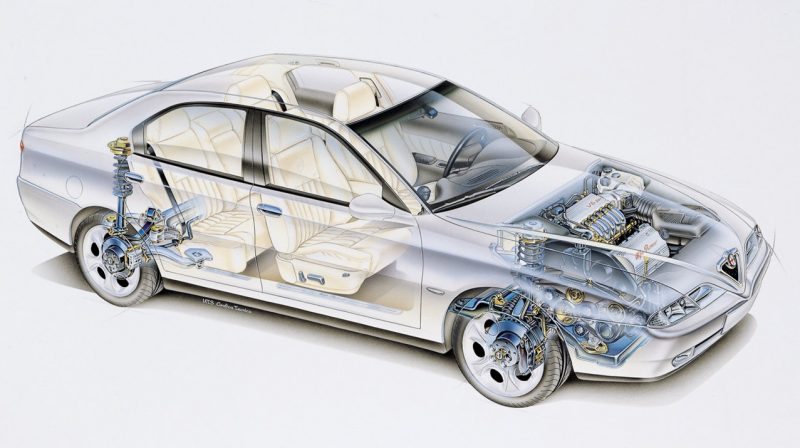
Starting from the Lancia Kappa, Alfa’s engineers set out to prove they could still deliver a sorted chassis. They binned the Lancia’s budget-conscious MacPherson struts for double wishbones at the front and a five-arm multilink at the rear. The handling and steering belie the 166’s bulk, and almost every contemporary review put it at the head of its class for driver involvement. Long-term testers largely warmed to it once they got over the looks, particularly pre-facelift, and waxed lyrical about the engines.
Alfa Romeo 166 engines: which one to buy
Let’s be honest: any Alfa lives and dies by its engine. The packaging draws us in, but years later what we get misty-eyed about is how those engines sounded and made us feel. The 166 is almost unique in that, at various stages of its life, it was powered by some of the best units ever to bear the Alfa Romeo name.
2.0 Twin Spark
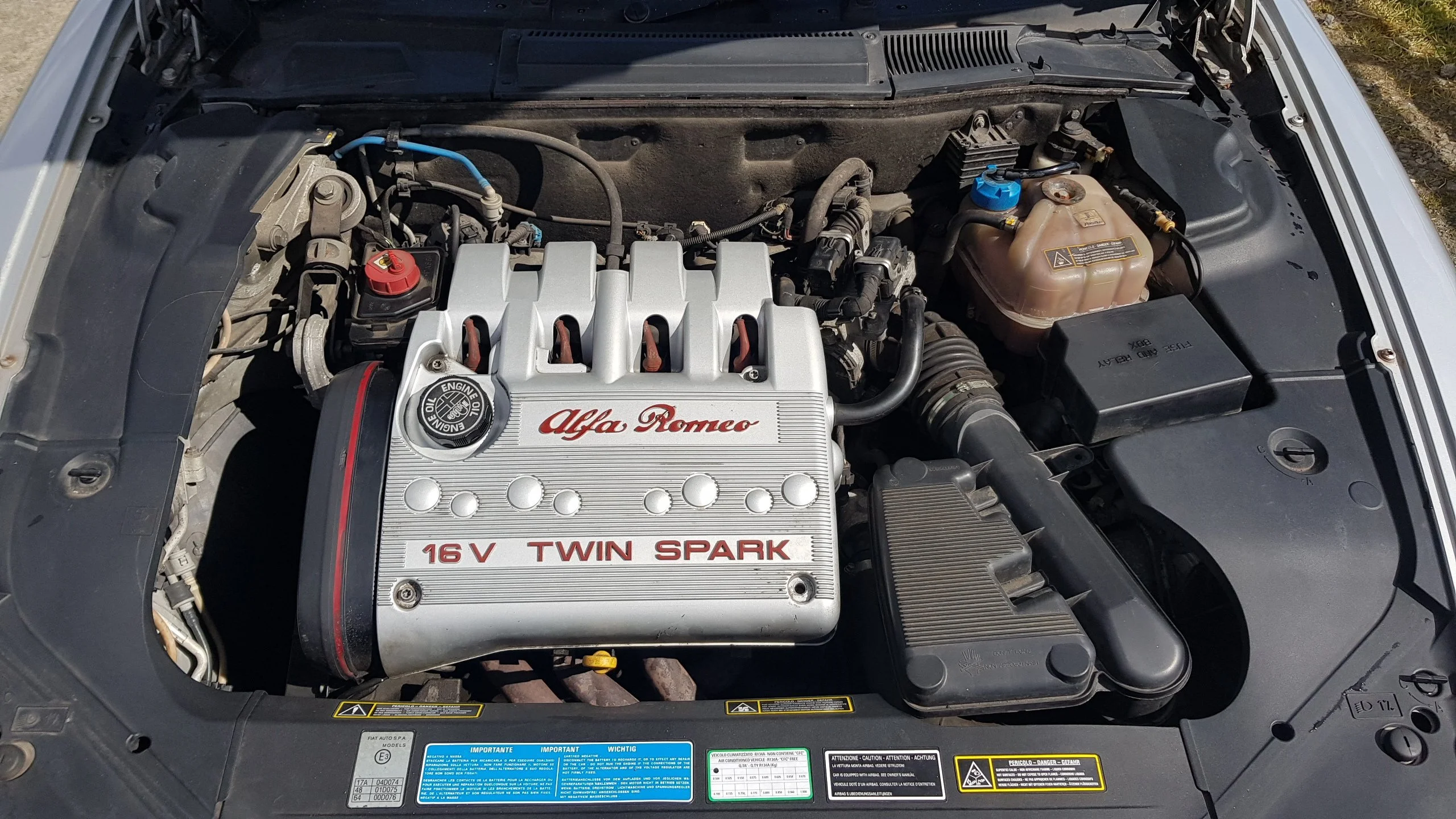
The entry-level 2.0 TS might sound out of its depth in a car that weighs 1.5 tonnes and measures 4.7 metres nose to tail, but it stepped up to the plate. Its 150bhp was just enough to keep 0-60mph under 10 seconds (9.5, to be precise, for manual cars), and what it lacked in outright performance it made up for in character.
The rev-happy nature feels even more eager in such a big car, tempting you to hang on to each gear for longer. It’s genuinely involving to drive. The price is economy: only the most careful drivers will see 30mpg in the real world, and the low 20s are more likely. Every Twin Spark 166 has a manual gearbox, so if you want the full two-pedal barge experience, you’ll have to keep looking.
Busso V6
2.0 V6 Turbo
Like the other Alfas it powered, the boosted, smaller-displacement Busso was less about solving a driving problem than squeezing under Italy’s strict tax brackets. It was never sold officially in right-hand-drive markets and was dropped entirely at the facelift, so it’s an incredibly rare find in the UK today.
2.5 V6
For us, this is the aficionado’s choice. You get the Busso soundtrack without much of the extra running cost of the bigger-displacement versions, and the real-world gap to the 3.0 is small.
3.0 V6
The 3.0 isn’t a hare to the 2.5’s tortoise. It’s 0.6 seconds quicker to 60mph and offers an extra 11mph at the top end, but its extra 40-or-so bhp means it works less hard at motorway speeds.
3.2 V6
Arriving with the revised front-end styling, the final development of the famed Busso gave 166 drivers 240bhp at 6,200rpm and 213lb-ft at 4,800rpm. Top speed rose north of 150mph and 0-60 took 7.2 seconds. It wasn’t an out-and-out hooligan like the 147 GTA, but the extra grunt let you cruise at motorway speeds in sixth gear at under 2,000rpm. It’s not in the same postcode as an E39 M5, yet it does put a different spin on the 166 whenever you use your right foot.
We say “if you can find one” because these are scarce anywhere in the world and scarcer than hen’s teeth in the UK. Fewer than 50 were sold new here, so owning one today is owning a unicorn in the Alfa world.
2.4 JTD
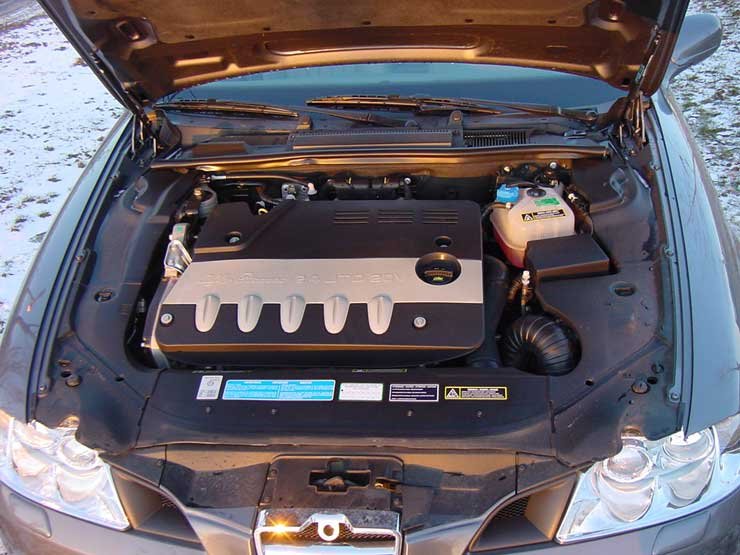
Like the turbocharged 2.0 V6, the diesel 166 never made it to the UK. That always seemed a big mistake, since diesel was de rigueur at the time and Alfa’s superb common-rail engines had always sold well in other models. On the continent, the original 2.4 JTD made up for modest power (134bhp) with serious torque (224lb-ft). Later 166s also offered the 20-valve 2.4 JTD Multijet, which looks like a sleeper on paper, at 182bhp and 284lb-ft of torque. Knowing what could be done to this engine in other cars piques our interest, but we’re highly unlikely to ever see one pass through our workshop doors.
You may be interested in…


Alfa Romeo 166 facelift: what changed
Back in 1998 Alfa’s press department had predicted 50-60,000 annual orders for the 166. In 2001, when total orders were still only around 40,000, Centro Stile was asked to restyle the 166 to answer the criticisms of its looks. Wolfgang Egger, who sketched the Nuvola (source of the original car’s much-maligned small-headlamp face) oversaw newcomer Daniele Gaglione in bringing the 166 into line with the facelifted 156, 147 and GTV/Spider. The result was first seen at the 2003 Frankfurt Motor Show, and journalists almost universally agreed it was a leap forward.
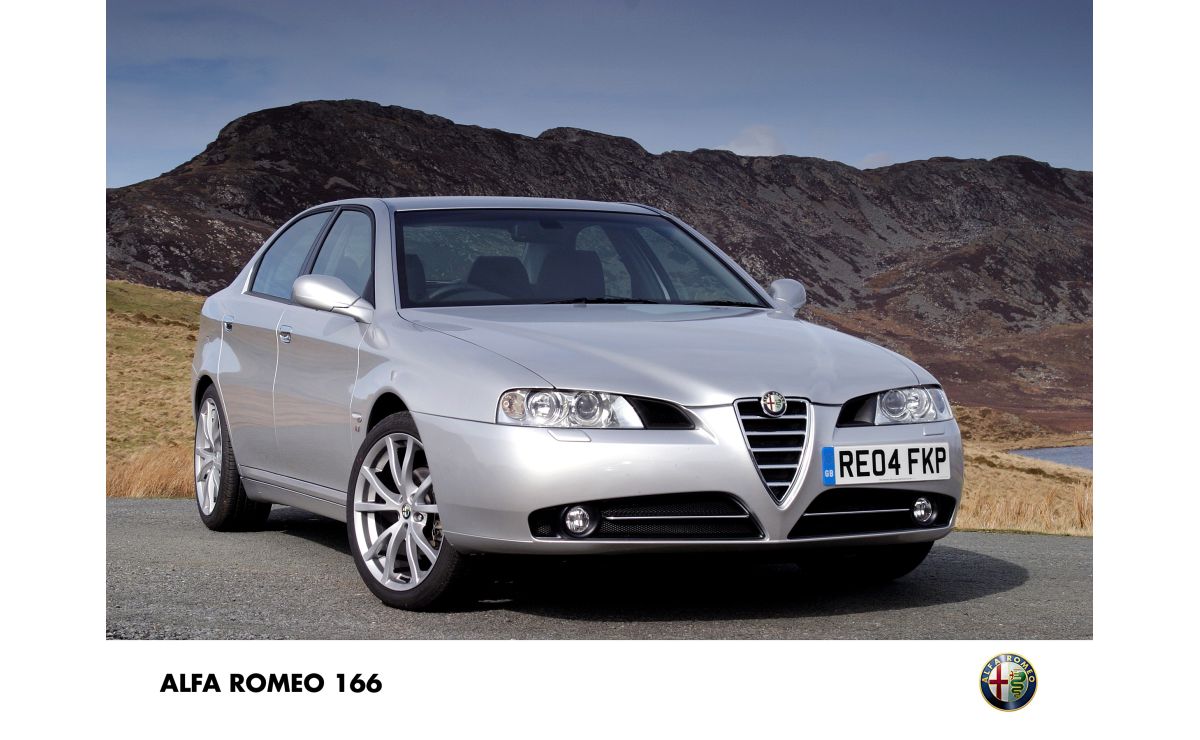
It shows how much Fiat Auto had riding on the 166 that the new nose came with a €60 million investment in the flagship. It covered cabin trim revisions, equipment upgrades, new safety features, new springs and damper rates to reduce body roll, and changes to the rear geometry. Toe-in now builds earlier, which Alfa said cut pitching under heavy braking, and the restyled car stopped from 62mph 3.8 metres shorter than its predecessor.
From the rear and side, it’s difficult to spot the difference between the two generations. The front end is dramatically changed, sharper, more Germanic and more contemporary. Today, though, we think the quirky original stands out more than the diluted facelift. As with the Giugiaro-penned 156 update, the added conformity loses a certain Alfa-ness.
Which is the better 166 to buy?
The facelift is demonstrably the better car to drive, which is no small matter given how well the original drove. The original has the character and the lower price. For us, we’d take the improved dynamics of the later cars but the engine may decide it for you: the rare 2.0 V6 Turbo exists only before the facelift, and the 3.2 only after it.
166 Trim Levels
Things get confusing here. On paper, the brochures drew clear lines between trims. In reality they blurred. Lussos should have had climate as standard, but some didn’t. Turismos should have been basic with a cloth interior, yet some had leather installed from the factory. We think the poor Alfa salesmen got so excited filling in a 166 order form that the gloves came off. You could have whatever you wanted, however you wanted it, as long as you signed on the line.
Pre-facelift Trim
Turismo
These started life as bog-standard, no-frills cars. But the whole accessories brochure would have been waved under the buyer’s nose, so Turismos can, and often do, have more bells and whistles than the supposedly higher-end Lussos. The standard giveaway is 16″ wheels.
Lusso
Usually MOMO leather, adjustable front seats, automatic wipers, an auto-dip rear-view mirror, the ICS (Integrated Control System) with cruise control, climate control and 17″ alloys.
Super
The label for cars with a manual gearbox, so a “Super Turismo” existed: a basic model with a manual box. Not really a trim level as such.
Facelift Trim
The Super label was dropped for the restyled cars. Only the 2.0 Twin Spark came as a Turismo, and all the V6s were Lusso spec. Interiors came as Sport (black), Classic (grey) or Elegant (beige), in cloth or leather.
TI
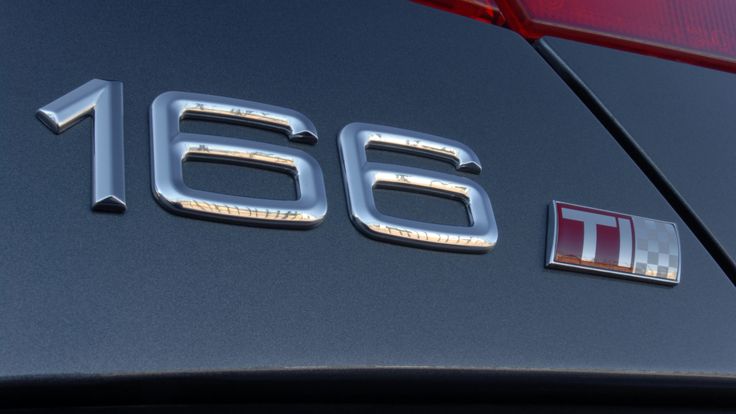
The TI was a £2,000 pack for any Lusso, not a standalone trim. Alfa advertised:
- 15mm lowered sport suspension
- revised spring and damper settings
- 18″ alloys
- black leather
- TI aluminium sill plates and central console
- Red instrument lighting
- TI badging
Optional Extras
Any car could also have a rear sun blind, heated front seats, xenon headlamps, a heated windscreen, a 6-disc CD changer, an upgraded 10-speaker hi-fi, GSM mobile data and sat-nav. Metallic paint was £500, and the iridescent Nuvola Blue added £2,000.
A fully-loaded, facelifted 3.2 V6 with the TI pack in the UK in 2004 could have easily tipped over the £37,000 mark.
If you’re buying a used Alfa Romeo 166, check the actual spec on the car, not the badge or how it’s recorded on the V5. The variation was so wide that almost every 166 was effectively a bespoke order. Features that cost a fortune when new, like the original sat-nav, are now close to obsolete, while rarities like the colour-shifting Nuvola Blue paint or a TI pack still command a premium.
Alfa Romeo 166 reliability: common problems and what to check
Every UK-supplied 166 is now at least 20 years old, so they’re all heading for classic status. Buying a big, heavy, forgotten Alfa might sound daunting, but it needn’t be. It’s a hard sell as a sensible daily in 2026, but as a weekend car with something a bit different about it, the 166 has plenty to offer. Come in with your eyes open and you could be in for a treat.
Engine
Every engine in the range needs regular cam belt changes. On the V6, forget Alfa’s original 72,000-mile or 5-year interval: budget for a full change every 50,000 miles or 4 years. Twin Spark cars need it every 32,000 miles or 3 years. Make sure a specialist did it and that the water pump [and, on Twin Spark cars, the variators] are fresh too. Both the Busso and the Twinny like a drink of oil, so don’t panic if you’re topping up regularly. Beyond that, there are no real horror stories. As always, regular servicing and a healthy MoT history are a good sign.
Electrics
Probably the biggest potential money pit. The systems were complicated when new, and many components are no longer available. Check everything important works (heater, windows, lights), but accept some niggles with the convoluted ICS, which was shared with Maseratis of the era. Chasing a solution to them could cost you as much emotionally as financially.
Suspension
The front upper wishbone is the most likely to wear. You can often hear it creaking from the cabin over bigger bumps. Telltale signs for worn rear suspension is a a wandering sensation when changing lanes above 50mph.
Clutch / Gearbox
3 available – a 5-speed manual, 6-speed manual and a 4-speed auto called “Sportronic”. Reliable throughout the range. A few years ago it became fashionable to fit Quaife diffs or LSDs to Alfa V6s, but in our opinion that’s largely a myth and can be ignored. The Sportronic automatic is not the ill-fated Selespeed. It’s far more robust and much nicer to live with.
Rust & Underbody
All Alfas rust, right? Nope. The 166 doesn’t suffer from rot any more than other cars of its age. Check the sills under the plastic trims, the top of the rear struts and all the bumper mounts. If it’s solid, get it rustproofed and it should stay that way.
Bodywork
Any damage to the iridescent colours (Nuvola Blue, Aurora and so on) is almost impossible to blend in locally, so expect a costly respray. Bumpers are prone to cracking and can realistically only be replaced with used ones from breakers.
Interior
Check for leaks. Drain holes can clog, and the resulting flood tends to target expensive parts such as the automatic transmission ECUs. The cabin also suffers from the “sticky plastic” problem common to Italian cars of the era.
How much does a used Alfa Romeo 166 cost?
For a car that was reportedly the UK’s worst-depreciating model in 2009, the 166’s time might finally be coming. Scarcity in the UK means sellers can now set out their stall, and a keen buyer will have to pay to source a decent example. We’re not yet locked into classic status, though, so bargains are still out there.
Our valuation tool at yourbestprice.co.uk has tracked Alfa 166 values over the past few months. As of October 2026, UK asking prices look like this:
| Group | Average asking price | Range |
|---|---|---|
| All UK cars | £4,495 | |
| Pre-facelift | £3,900 | £2,250 to £6,500 |
| Facelift | £5,150 (£3,600 without one outlier) |
The cheapest pre-facelift car was a 2.5 V6 manual in Nuvola Blue that needed paint. The dearest was a red 2.5 V6 Super with black leather and 101k miles that looked well sorted. The facelift average is skewed by a single 3.0 V6 listed at £12,950 (since cut to £10,500).
Outside the UK, prices are much more bullish: an overall average of £9,200, with little difference between generations. The current ceiling is a 2000 3.0 V6 manual in Nuvola Blue with just 38k miles (61k km), listed in the Netherlands at over £16,600 (€19,950).
Should you buy an Alfa Romeo 166?
A used Alfa Romeo 166 is not a sensible purchase, lets be honest. A sales disaster that was completely overshadowed by the 156’s successes. A big cruiser of an Alfa, with no frugal, efficient option ever made available to UK buyers. But as a weekend car with space and plenty of real character, it’s hard to match for the money. Few big saloons of its era handle, sound or look as individual.
If you want one, here’s the short version:
- Pick the engine first. Our pick is the 2.5 V6, with a manual gearbox (the auto’s gearing is much better suited to the 3.0). The 3.2 is the one to find if you can, and the 2.0 Twin Spark is the cheap, characterful entry point.
- Choose the car, not the badge. Trim names are unreliable, so check the actual spec.
- Prioritise the history. Look for evidence of cambelt changes, a working set of electrics and no leaks.
- Check the body, then protect it. A solid car is worth rustproofing, and iridescent paint damage is costly to put right.
- Expect to pay a fair price. UK cars currently average around £4,500 asking, against roughly £9,200 on the continent, so a good UK example is worth paying for.
Looking for a 166, or not sure what you’re looking at? Browse our current showroom, or get in touch. We’ll help you find one or inspect it before you buy.


